
Every year on 28 November, the Mediterranean region and its peoples come together to celebrate the Day of the Mediterranean — a day dedicated to honouring our shared history, cultural heritage and common identity.
The date recalls the start of the Barcelona Process in 1995 — the milestone which laid the foundations for long-term cooperation among Mediterranean countries and eventually gave rise to the Union for the Mediterranean (UfM).
For us at FCM, this is more than a symbolic anniversary — it is a moment to reflect on what unites us, celebrate the diversity that defines us, and reaffirm our commitment to shared values: dialogue, solidarity, cooperation and mutual respect.
This year, the celebration of the Day of the Mediterranean gains additional significance — as the region embraces a new chapter with the introduction of the Pact for the Mediterranean.
The Pact aims to build a Common Mediterranean Space — one that is connected, resilient, prosperous and secure. Its scope covers three interlinked pillars:
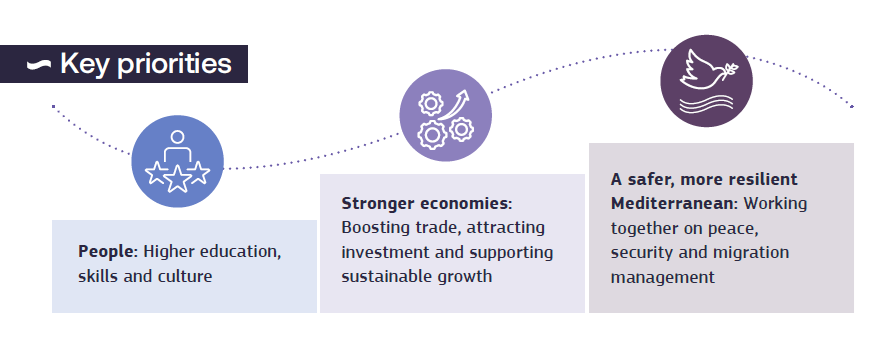
While the Day of the Mediterranean remains fundamentally about identity, culture and cooperation, the Pact brings a renewed practical dimension: transforming ideals into concrete projects and opportunities for people, businesses and societies across all shores of the region.

As the only regional organisation representing professional accountants across the Mediterranean, FCM plays a strategic role in this renewed moment of Mediterranean ambition:

On this Day of the Mediterranean 2025, FCM calls on its members, partners and the broader Mediterranean community to:
The Mediterranean is much more than a sea — it is a living community of peoples, cultures, traditions and hopes. On this 28 November, the Day of the Mediterranean invites us to celebrate that community, honour its legacy and commit to its future.
At FCM, we stand ready — as accountants, as professionals, as Mediterranean citizens — to accompany that journey.
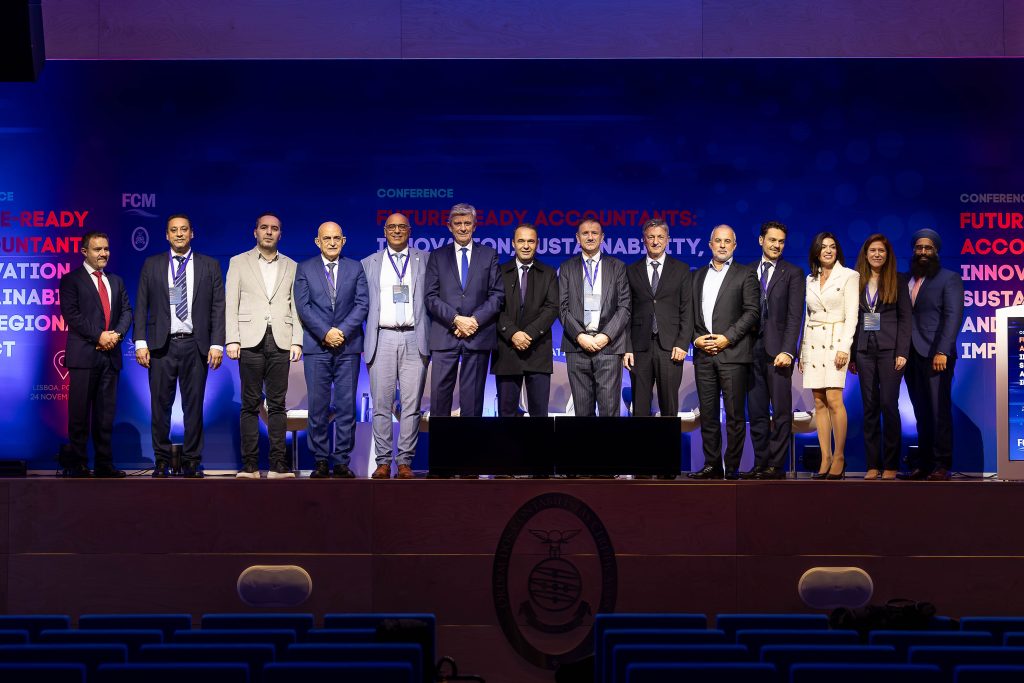
Giving Voice to Mediterranean Diversity and Bridging Differences
On 24 November, the António Domingues de Azevedo Auditorium, in Lisbon, once again became the stage for an international conference — gathering representatives from diverse jurisdictions across Europe and North Africa, all united by a shared Mediterranean sea.
Titled “Future-Ready Accountants: Innovation, Sustainability and Regional Impact”, the event was timed to coincide with the upcoming Mediterranean Day on 28 November, an occasion celebrating intercultural exchange, cooperation, diversity and the strengthening of bonds among Mediterranean peoples. (Mediterranean Day)
Throughout an afternoon of rich debate, the Ordem dos Contabilistas Certificados (OCC) and FCM joined forces to discuss how the cultural and professional diversity of various countries can help address the multiple challenges of our modern era.
Adaptability and Integrity
At the opening session, after the screening of OCC’s institutional video (English version), the OCC’s President stressed that regarding sustainability reporting “certified accountants and auditors are increasingly integrated,” and that these professionals have the duty to “provide the trust needed by users of non-financial information.”
In his remarks, FCM President Nelson Ferreira underscored the importance of conferences like this one to ensure “that accountants are ready to face the future and a rapidly changing reality.” He noted that, in the context of technological transformation, professionals must embrace specialisation and strengthen their skills.
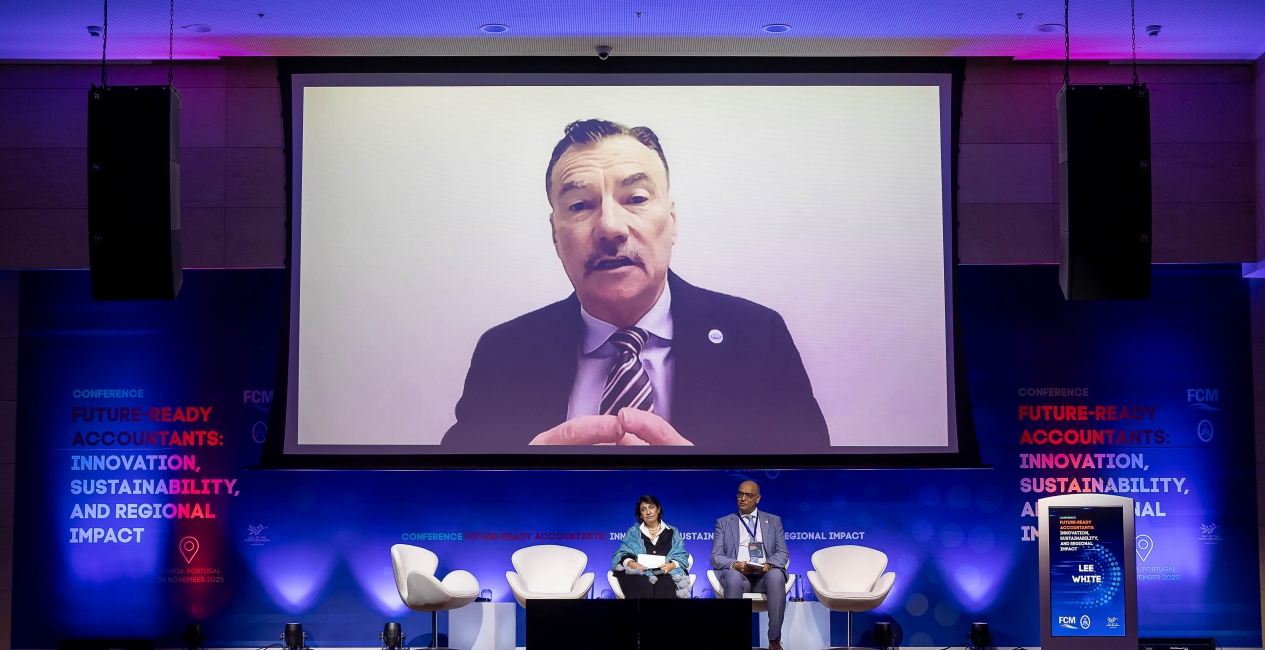
Also contributing via a video message was Lee White, CEO of the International Federation of Accountants (IFAC). He emphasised the vision and leadership shown by the heads of OCC and FCM, particularly the promotion of “spaces of collaboration and reflection that our global profession needs — giving voice to diversity in favour of unity.” He added: “We are stronger when we listen to each other. This is a profession that opens doors anywhere in the world. Adaptability and integrity are what make this profession truly global.”
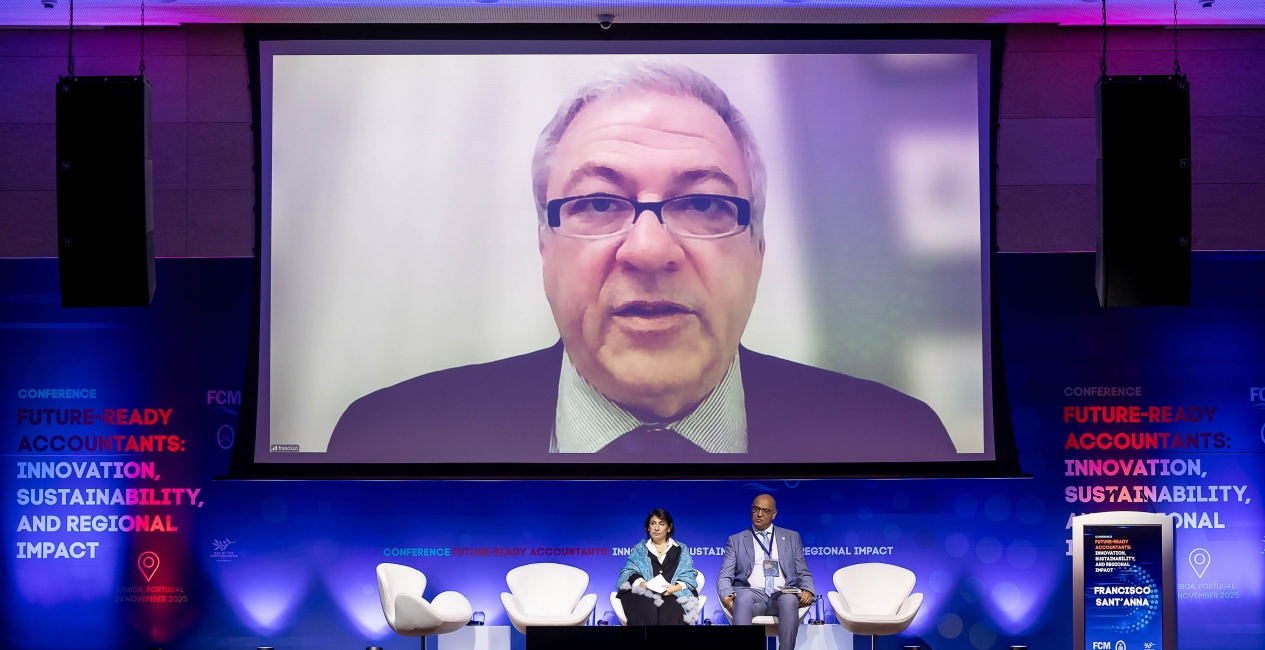
Speaking live from abroad was IFAC Board member Francisco Sant’Anna, who reflected on the demands placed on today’s accounting professionals. The Brazilian accountant asserted that professionals — as “agents of public trust” — should not settle for traditional roles, but strive for greater influence in high-level decision-making due to their unique knowledge. For Sant’Anna, the current global transformations represent an opportunity for the repositioning of the certified accountant in the world.
“Acting now is not optional — it is strategic.”
ESG, Sustainability and Public Value
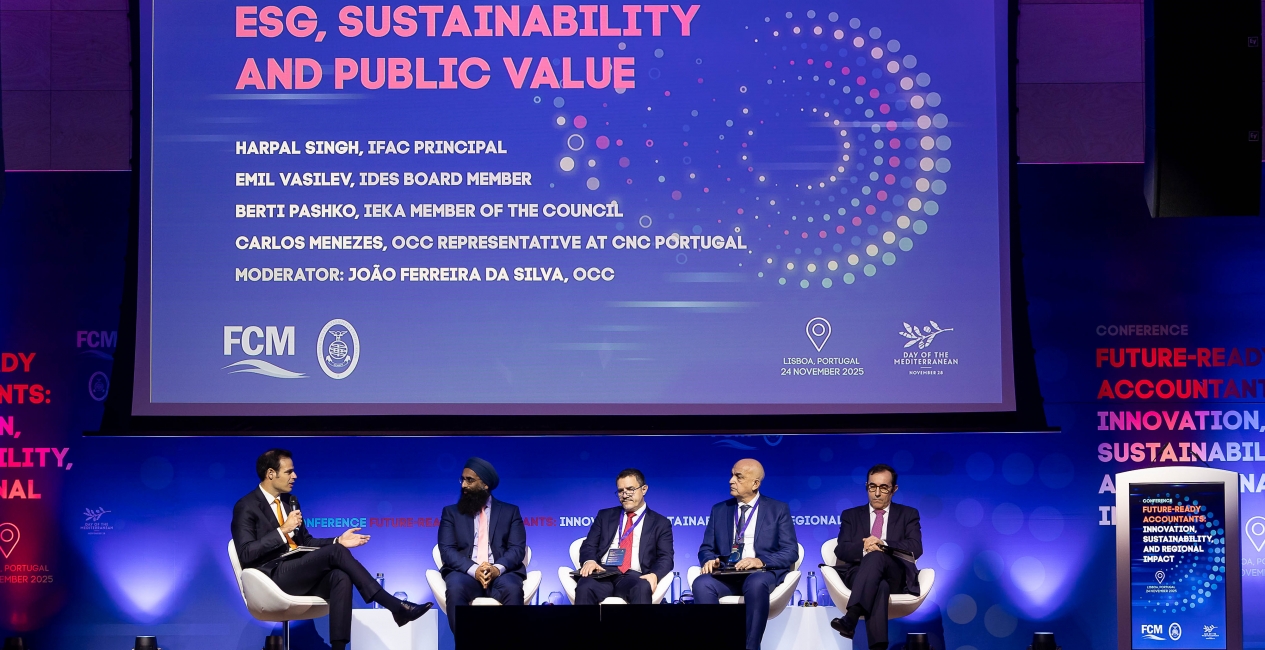
The first panel — titled “ESG, Sustainability and Public Value” — was moderated by João Ferreira da Silva (advisor to the OCC President).
British expert Harpal Singh argued that, for small and medium-sized enterprises, resilience in a changing world must be supported by financial and sustainability literacy. As IFAC’s lead for SMEs and a representative of the Edinburgh Group, he emphasised the fundamental need to ensure “the voices of these companies are heard.”
From Bulgaria, Emil Vasilev (Institute of Certified Public Accountants of Bulgaria – IDES) described how his country is integrating sustainability directives, particularly regarding corporate sustainability reporting, in the context of Europe’s evolving regulatory framework. Vasilev noted that the one-year postponement of the directive offers breathing space — but also brings uncertainty.
From Albania, Berti Pashko (Institute of Certified Public Accountants of Albania – IEKA) presented his institution’s commitment to sustainability. He argued that sustainability will contribute to good governance, integrity and the building of public trust.
Representing OCC on the national accounting standards committee, Carlos Menezes stressed that “acting now is not optional — it is strategic.” He added that the connectivity between financial reporting and sustainability reporting cannot wait: the two must merge into a coherent and unified narrative.
Rethinking Management and Leadership in the Mediterranean
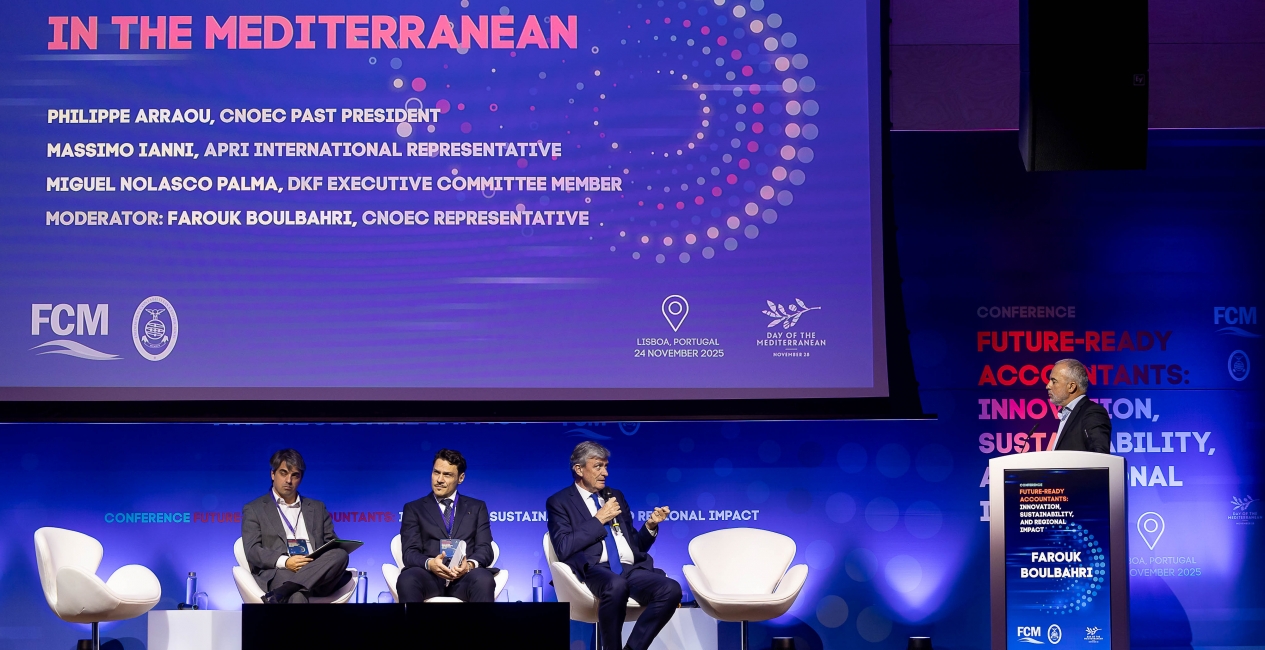
After the coffee break came the panel “Rethinking Management in the Mediterranean”, moderated by a representative of the French Conseil National de l'Ordre des Experts-Comptables (CNOEC), who highlighted the professional culture across Mediterranean organisations.
Veteran figure in international accounting gatherings, Philippe Arraou (ex-President of CNOEC) focused on the human dimension: “We must care deeply for the people we work with and manage human resources as part of the business. The best way to manage people is to set clear goals, delegate responsibility, and integrate them into the enterprise.” He emphasised responsibility and recognition as key pillars for retaining talent.
Italian accountant Massimo Ianni (APRI International), working on policies for internationalisation, argued that rethinking management is not merely a slogan, but a framework encompassing various components — especially leadership renewal.
From the consulting firm DFK, Miguel Nolasco Palma argued that talent retention in SMEs depends on engaging employees — especially younger generations, who value a work-life balance over traditional career progression. As he put it: “The new generations don’t want to be partners in the firm — they want fair remuneration while preserving social and family life.” He posed a critical question facing Mediterranean economies: “Who will lead organisations in the near future?”
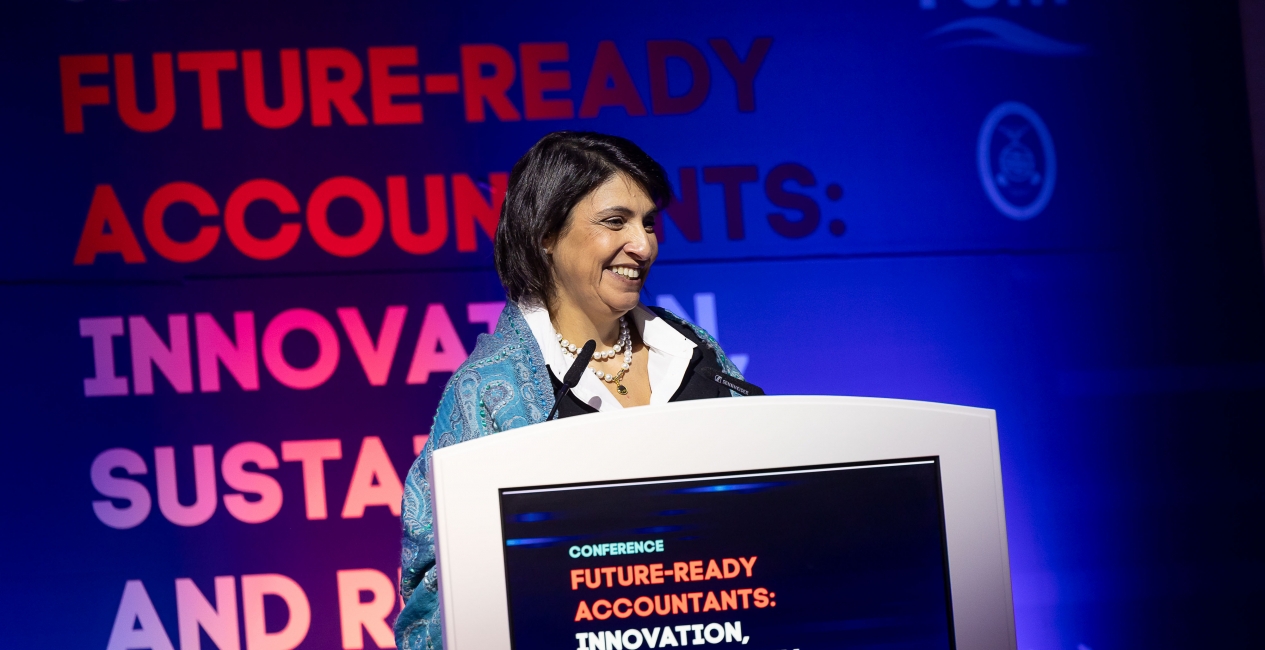
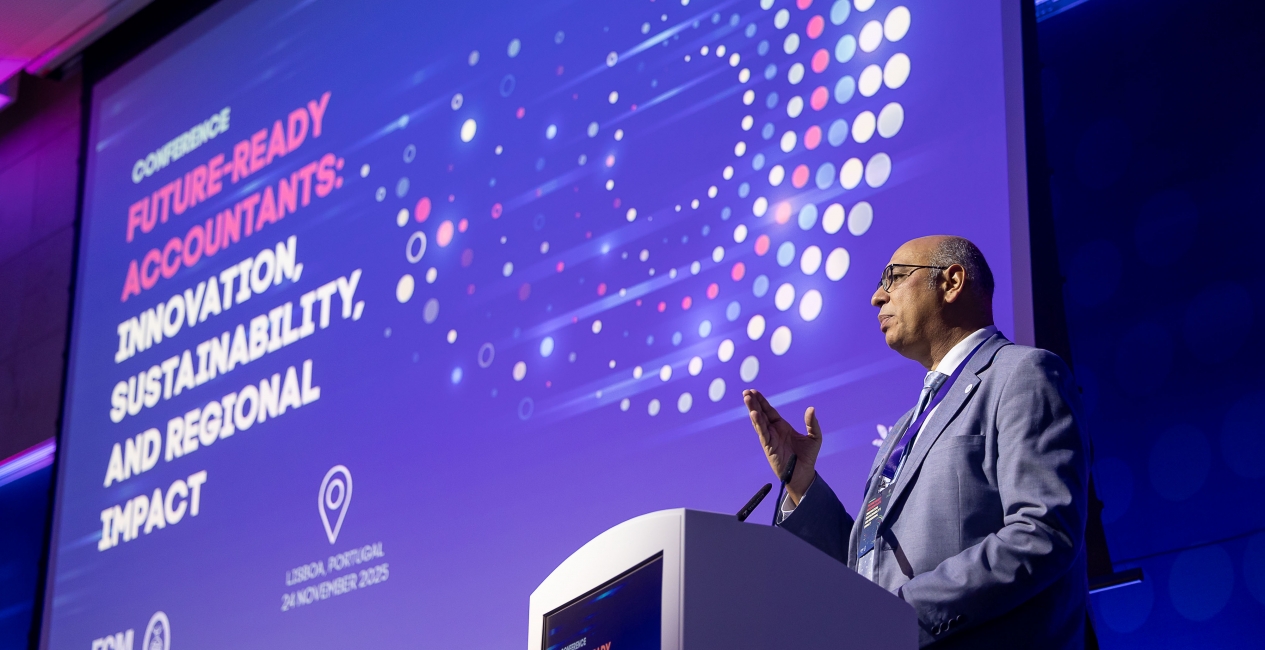
Capacity Building and Regional Cooperation
The next session, “Capacity Building and Regional Cooperation”, highlighted how professional accountancy organisations can shape the future of the profession.
From Greece, Panagiotis Alamanos (IFAC) urged national PAOs to adopt resilient strategies focused on their members, capable of shaping the evolution of the accountancy profession in the Mediterranean region.
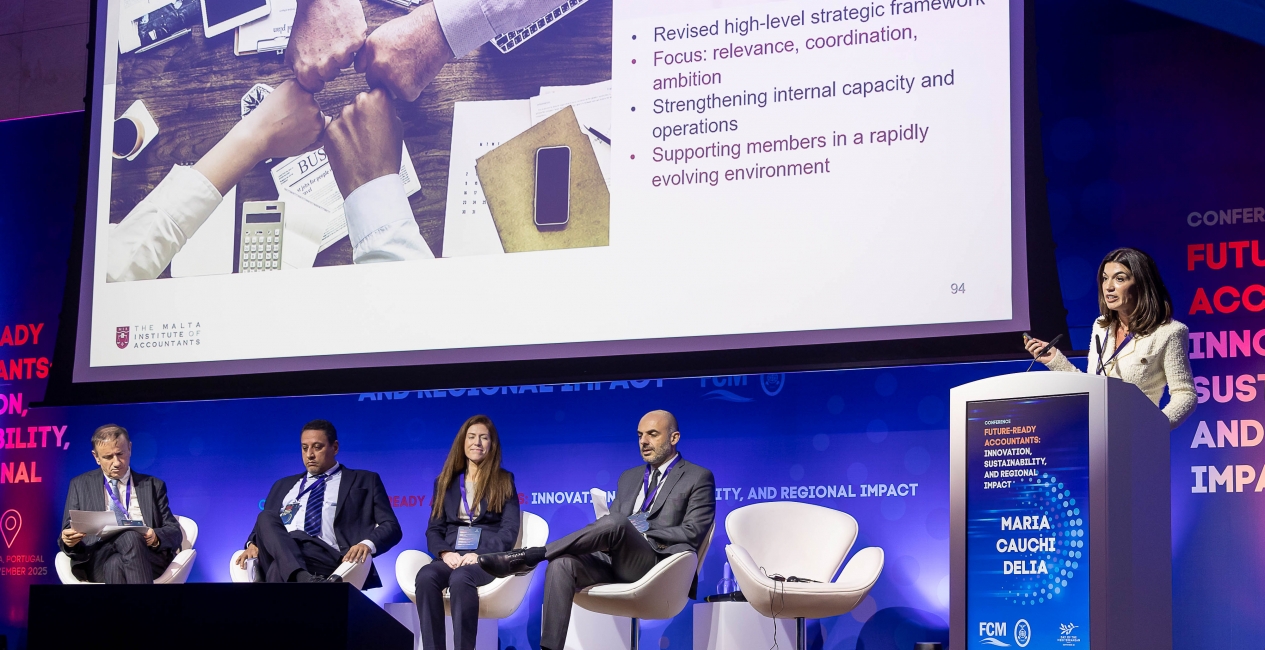
From Malta, Maria Cauchi Delia (CEO of the Institute of Accountants of Malta) presented her organisation (4,500 members) and emphasised “relevance and sustainability” as the foundations of its strategy. She defended that accountants must develop cross-cutting skills, and avoid the narrow stereotype — in particular by raising awareness among schools, universities, regulators and authorities about careers in accountancy.
Representing Tunisia, Sami Soumri (Secretary-General of the Order of Accountants of Tunisia – OCT) discussed professional cooperation and training in his country. Stressing the need for sharing, cooperation and joint effort, he proposed the creation of a Mediterranean Observatory for Accountancy Training. Faced with emerging risks, Soumri identified the certified accountant as “the guarantor of financial information and economic stability in our countries.”
From the global body Association of Chartered Certified Accountants (ACCA), Ms Caitriona Allis (Head of Europe) reiterated the commitment to public interest and outlined key trends: changing standards, competition for talent and digital transformation. The session was moderated by Society of Certified Accountants and Auditors of Kosovo (SCAAK), whose representative underlined regional cooperation as the bedrock of FCM’s dynamic.
A Pact of Hope for the Mediterranean
A central theme of the conference was the newly launched Pact for the Mediterranean by the European Commission on 16 October 2025 — a bold initiative aimed at deepening cooperation and building a “Common Mediterranean Space” rooted in joint ownership, co-creation and responsibility. (European Commission)
During the closing session, FCM President Nelson Ferreira described the Pact as a “signal of hope.” He noted the potential of the planned “Mediterranean University” to provide specialised training for accounting and tax professionals across the region.
In her remarks, business leader Sofia Baião Horta affirmed that the Pact promises shared prosperity — and called for the business community to be deeply engaged in this commitment. As representative of the Confederação Empresarial de Portugal (CIP) for international relations, she argued that the Mediterranean’s voice and dimension must be acknowledged in the broader EU political agenda. She also reminded participants that Portugal will assume the presidency of the MED‑9 group in 2027 — the alliance of nine euro-Mediterranean countries working together on issues like migration, climate and economic stability.
In closing, Nelson Ferreira spoke of “the beginning of a new era,” calling the Pact for the Mediterranean an “impetus for new achievements.” He underlined that, for certified accountants, specialisation in sustainability reporting will be a central step towards adding value to the profession.

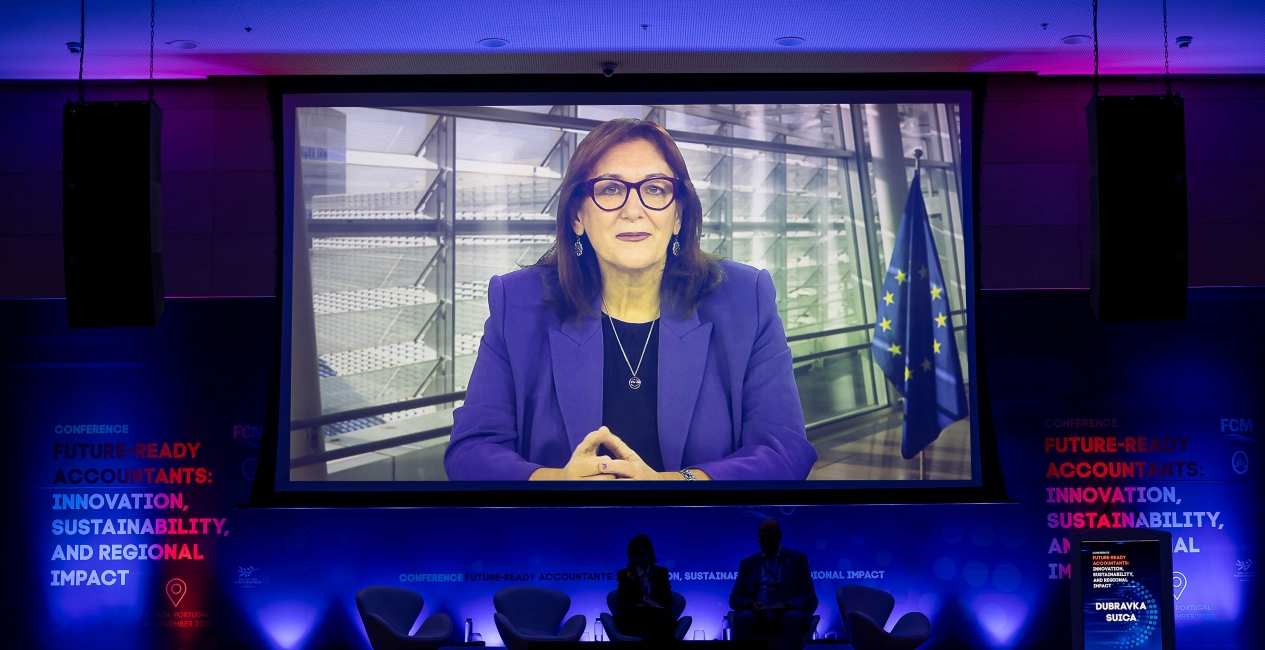
This conference reaffirmed that the accounting profession in the Mediterranean is not only prepared to adapt — it is ready to lead, inspire and shape a future of cooperation, sustainability and shared prosperity across the region.
>> Click to view the full video conference
In an increasingly complex international trade landscape, clarity and confidence have become essential.
While policy shifts, geopolitical tensions and regulatory adjustments add layers of uncertainty to global markets, they also reinforce the need for reliable guidance and forward-thinking professional advice.
For businesses across the Mediterranean, the accounting profession offers just that: a steady compass in volatile seas.
Based on the latest UN Trade and Development (UNCTAD) report, this article examines how Mediterranean accountants can lead the way in helping businesses adapt, diversify, and thrive — not despite uncertainty, but because they are prepared for it.
⚠️ Uncertainty is the new tariff – and it’s worse
According to UNCTAD, uncertainty is often more disruptive than tariffs. Firms may adapt to rising costs, but they cannot effectively plan around ambiguous or shifting trade policies.
Recent US trade policy shifts are a vivid example. The announcement of new tariffs in early 2025 created a surge in volatility before the tariffs even took effect, as firms scrambled to pre-empt potential costs. Once the policies were implemented, volatility decreased — not because the environment improved, but because the rules were finally known.
🧱 Structural risks for small firms and vulnerable economies
The burden of trade policy uncertainty is not shared equally.
For Mediterranean economies, this poses both a macro-level risk and a micro-level opportunity for intervention.
🔎 The role of accountants: from compliance to strategic advisory
In this context, accountants must go beyond their traditional roles. Trade policy uncertainty impacts:
Professional accountants are ideally placed to:
For FCM - Fédération des Experts Comptables Mediterranéens / Federation of Mediterranean Accountants and its member bodies, the challenge is clear: build the capacity of the profession to serve as strategic advisors in a volatile global trade environment.
🌍 Diversification and trade agreements: essential shock absorbers
UNCTAD data shows that countries and companies with diversified export markets suffer less from trade volatility. Similarly, exporters operating under regional or bilateral trade agreements tend to enjoy more stable conditions.
Mediterranean economies, many of which are:
...must therefore prioritise market diversification and stronger participation in rule-based trade frameworks.
Accountants can directly support this agenda by identifying:
🛡️ Towards trade resilience: what can be done?
UNCTAD proposes concrete recommendations to mitigate policy uncertainty:
For FCM, this means also:
✅ Conclusion: The Mediterranean needs more than trade – it needs trusted professionals
As trade becomes increasingly political, unpredictable and fragmented, the accounting profession must act as a stabilising force. Mediterranean economies cannot afford to be passive recipients of global disruptions.
Through informed advisory, technical competence and ethical leadership, accountants can help build resilient export strategies, sound financial planning, and credible long-term investment frameworks — especially for SMEs.
The FCM reaffirms its commitment to promoting a profession that protects not just compliance, but the future of Mediterranean businesses in an increasingly unstable global marketplace.
🔍 Glossary of Key Terms
🟠 Trade Policy Uncertainty The unpredictability surrounding changes in trade rules, tariffs, regulations, or agreements that affect international commerce. It increases risks for businesses and governments by making planning and investment decisions more difficult.
🟠 Tariff A tax imposed on imported goods, often used to protect domestic industries or as a tool in trade negotiations.
🟠 Value Chain The full range of activities involved in producing and delivering a product or service, from raw materials to final customer. Global value chains refer to these processes crossing multiple countries.
🟠 Front-loading A business strategy of accelerating shipments or purchases ahead of expected changes in trade conditions (e.g., before new tariffs are imposed).
🟠 Rules of Origin Criteria used to determine the national source of a product, relevant for trade agreements, tariffs, and customs procedures.
🟠 Trade Diversification The process of expanding the number and variety of export markets to reduce dependency on a single country or region.
🟠 Regional Trade Agreement (RTA) A treaty between two or more countries that facilitates trade by reducing tariffs and setting shared rules. Examples include the EU, USMCA, or the African Continental Free Trade Area.
🟠 Least Developed Countries (LDCs) Countries classified by the United Nations as having the lowest indicators of socioeconomic development, often facing special challenges in accessing international markets.
🟠 Strategic Ambiguity The deliberate use of vague or undefined policy measures by governments to retain flexibility, negotiate leverage, or avoid political backlash—often at the expense of predictability for businesses.
Introduction: Beyond Theory, Into Daily Practice
Artificial Intelligence (AI) is no longer a concept reserved for future planning — it is already in active use across accounting offices, audit firms, tax practices, and public finance departments. In the Mediterranean region, professionals are beginning to deploy AI in practical and measurable ways, improving efficiency, precision, and the value of services provided. Yet these applications come not only with opportunities, but with complexity. Each use case demands a balance between innovation and caution, automation and accountability.
This article explores real and emerging applications of AI in the accounting profession, highlighting their benefits and risks within the Mediterranean context. It also considers how legislation and professional self-regulation can help secure an ethical and sustainable transformation.
1. Automated Document Processing and Classification
AI tools are increasingly used to extract, categorise, and structure financial data from invoices, contracts, tax documents and bank records. These solutions reduce manual workloads and free up professionals for more strategic tasks.
Opportunities and Benefits:
Risks and Safeguards:
2. Natural Language Reporting and Advisory Narratives
Generative AI is now capable of producing readable summaries of financial results, projections, and audit findings. These outputs are often used as first drafts, refined and approved by professionals.
Opportunities and Benefits:
Risks and Safeguards:
3. Continuous Monitoring and Anomaly Detection
AI systems are now being applied to analyse transactions in real time, detecting patterns that deviate from expected behaviour and triggering alerts.
Opportunities and Benefits:
Risks and Safeguards:
4. AI-Augmented Tax Research and Legal Interpretation
AI-powered tools trained on legal and fiscal content support professionals in navigating complex, evolving legislation and jurisprudence.
Opportunities and Benefits:
Risks and Safeguards:
5. Advisory Dashboards and Client-Facing Analytics
AI enables the generation of interactive dashboards that offer real-time KPIs, visual reports, and customised financial scenarios for clients.
Opportunities and Benefits:
Risks and Safeguards:
A Mediterranean Lens: Gaps and Potential
While some Mediterranean firms are adopting these tools, many face significant barriers: language limitations in AI interfaces, low digital literacy among SMEs, and the absence of affordable, locally relevant platforms. At the same time, the region enjoys strong ethical traditions, close professional networks, and increasing alignment among national bodies.
To enable equitable adoption across the Mediterranean:
The Role of Legislators and Professional Bodies
As AI’s influence grows, legislators must strike a careful balance between enabling innovation and protecting the public interest. The EU AI Act offers a promising framework, but its national implementation must be adapted to local professional realities.
Professional bodies have a parallel duty to:
Conclusion: Shaping the Transition Together
AI is no longer on the horizon — it is embedded in the daily practice of the accounting profession. For Mediterranean accountants, this is a moment of strategic responsibility. With pragmatic implementation, ethical safeguards, and regional solidarity, AI can become a trusted ally — not to replace human expertise, but to enhance it.
Now is the time to ensure that technology serves the profession’s values and reinforces its vital role in public accountability, client service, and economic stability.
Introduction The Pan-European Public Procurement Online (Peppol) framework is a cross-border eProcurement and eInvoicing infrastructure originally developed to facilitate electronic communication between businesses and public administrations in Europe. While its name reflects its European origin, Peppol has grown into a global model for digital interoperability in public procurement. This article traces its evolution—from theoretical foundations to its operational model—analyses the regulatory architecture underpinning its implementation, and examines current and potential adoption in the Mediterranean region.
1. Origins and Early Development The Peppol initiative emerged from the European Union’s ambition to streamline and digitise public procurement processes across Member States. Initiated in 2008 under the EU's Competitiveness and Innovation Framework Programme (CIP), it responded to a clear need: ensuring seamless electronic exchange of procurement documents across different national systems.
Inspired by the conceptual work of the eProcurement Multistakeholder Forum and the European Interoperability Framework, Peppol’s design was based on open standards and the principle of mutual recognition of digital documents. Early pilots in Norway, Denmark, and Italy helped shape practical implementations and validate the concept.
At its core, Peppol was conceived not as a centralised platform, but as a federated infrastructure rooted in open interoperability principles, drawing on earlier academic and policy work around semantic standards, service-oriented architectures, and XML-based document schemas. Its implementation leveraged established technologies such as the Universal Business Language (UBL) and was informed by early efforts to create modular, reusable frameworks for cross-border public service delivery. This foundation allowed Peppol to evolve into a technically neutral, scalable network that could integrate diverse national systems while preserving local autonomy.
2. From Pilot to Infrastructure: Building the Legal and Governance Framework Peppol transitioned from an EU-funded project to a sustainable legal and operational structure with the creation of OpenPeppol AISBL in 2012, a non-profit international association responsible for governance and evolution of the Peppol specifications.
The legal foundation of Peppol includes:
Countries like Norway, Denmark, and the Netherlands were early adopters and promoters of Peppol-compliant systems, helping to create a mature and proven environment for other jurisdictions to emulate.
3. Peppol as Norm and Policy Instrument Peppol is not a single platform but a network of Access Points that use common specifications to exchange e-documents. Its architecture enables interoperability without centralised control. It embodies policy objectives such as:
Its voluntary but standardised adoption model allows both public and private sector entities to gradually join the network under a shared governance framework.
4. Benefits and Challenges
Pros:
Cons:
5. Extending Peppol: From Four-Corner to Five-Corner Model Peppol was originally structured on a four-corner model, enabling interoperability between sellers, buyers, and their chosen access points. However, governments are increasingly leveraging Peppol for Digital Reporting Requirements (DRR), such as Continuous Transaction Controls (CTC), which require near-real-time reporting of invoice data to tax administrations.
To meet this need, Peppol supports an extended five-corner model, in which a tax authority acts as an additional recipient of transactional data. This allows the same eInvoice to serve both commercial and regulatory purposes, reducing the compliance burden while improving VAT collection and enabling ESG or other forms of eReporting.
6. Driving Global Interoperability: The Role of PINT Peppol has developed the Peppol International Invoice (PINT) to address the need for cross-border and cross-continental interoperability. The PINT model includes:
This enables businesses and governments in different jurisdictions to exchange invoices seamlessly while respecting local requirements. The PINT model is already being implemented across Asia-Pacific and is poised for adoption in other regions, including the Mediterranean.
7. Peppol in the Mediterranean: Adoption and Outlook (Expanded)
Several Mediterranean jurisdictions have begun engaging with Peppol or expressed interest in aligning with its standards. Among the countries where FCM member organisations are based, progress is varied but increasingly strategic:
Anticipated Benefits for FCM Jurisdictions:
Identified Risks and Considerations:
Conclusion Peppol represents an effective blend of open standards, legal certainty, and decentralised governance. Its potential in the Mediterranean—particularly for countries seeking closer economic ties with the EU—is considerable. As digitalisation accelerates globally, Peppol offers a pragmatic path to interoperability, transparency, and efficiency in public procurement and beyond. By engaging proactively, Mediterranean countries can future-proof their public finance systems and foster regional integration through trust-based digital infrastructure.
Technical Glossary
Peppol Access Point (AP): A certified digital service provider authorised to send and receive electronic documents (e.g., invoices, orders) on behalf of its users within the Peppol network. It functions as a "digital postal service," enabling businesses and public entities to exchange documents across borders using common standards. Access Points operate within a 4-corner model:
eInvoice: A structured digital invoice format (e.g., UBL – Universal Business Language) designed for machine-to-machine processing. It is not a PDF, image, or spreadsheet, and must conform to standardised specifications for validation and automation.
DRR / CTC (Digital Reporting Requirements / Continuous Transaction Controls): Legal mechanisms requiring real-time or near-real-time reporting of transactional data (e.g., invoices) to tax authorities, enabling faster tax collection and reduced fraud.
PINT (Peppol International Invoice): A cross-border e-invoicing specification that separates invoice data into shared, aligned, and distinct elements, enabling interoperability between jurisdictions with differing legal frameworks.
SMP/SML (Service Metadata Publisher / Locator): Components of the Peppol infrastructure that enable access points to discover routing and capability data of recipients, ensuring proper message delivery within the network.
eReporting: The use of digital mechanisms to comply with regulatory reporting requirements, such as ESG disclosures or tax submissions, often integrated within invoice data flows.
UBL (Universal Business Language): An open standard developed by OASIS for XML-based electronic business documents. It provides a semantic framework for consistent data exchange in eProcurement and eInvoicing, and serves as the backbone format for Peppol BIS specifications.
Introduction The "VAT in the Digital Age" (ViDA) initiative by the European Commission is a key reform aimed at modernising VAT systems across the European Union (EU). It introduces new requirements such as real-time digital reporting of transactions, mandatory structured e-invoicing, and simplified VAT registration for businesses operating in multiple EU countries. The objective is to create a more transparent, efficient, and fraud-resistant VAT environment. A policy communication titled “Viva la ViDA!”, published in November 2024, reinforced the EU’s commitment to full implementation by 2028.
Although ViDA is designed for EU Member States, its influence extends beyond EU borders—particularly to neighbouring Mediterranean countries. Many of these nations are already pursuing digital transformation in tax administration and are aligning with European standards to support trade, transparency, and regional integration. This article explores how ViDA may affect both EU and non-EU members of the FCM (Fédération des Experts Comptables Méditerranéens) and outlines how accounting professionals can respond to these changes.
1. Understanding ViDA: The Three Pillars
ViDA is structured around three key pillars:
Together, these pillars aim to harmonise VAT compliance, reduce administrative burden, and enhance the digital single market.
2. Implications for EU-Based FCM Jurisdictions
In EU countries that are members of the FCM—such as Italy, France, Greece, Spain, Cyprus, Bulgaria, and Malta—ViDA introduces both compliance requirements and opportunities for modernisation:
Professional bodies should:
3. Opportunities for Non-EU Mediterranean Jurisdictions
Countries outside the EU—such as Egypt, Tunisia, Morocco, Turkey, Albania, and Kosovo—will not be legally bound by ViDA but are nonetheless likely to feel its influence:
4. Avoiding a Digital Divide
To ensure that ViDA does not widen the digital and regulatory gap between EU and non-EU countries, FCM members should work collaboratively to:
5. The Emerging Role of Mediterranean Accountants
ViDA is accelerating a shift in the accounting profession—from traditional compliance roles to leadership in digital transformation. Mediterranean accountants are well positioned to:
Conclusion
ViDA represents more than regulatory reform—it is a strategic blueprint for digital transformation in taxation. For the Mediterranean region, ViDA opens a path to greater interoperability, improved governance, and renewed relevance for the accounting profession. By embracing these reforms, both EU and non-EU FCM members can strengthen their integration with the European economic space and advance public trust through more transparent and modern tax systems.
Further Reading and References

