
Giving Voice to Mediterranean Diversity and Bridging Differences
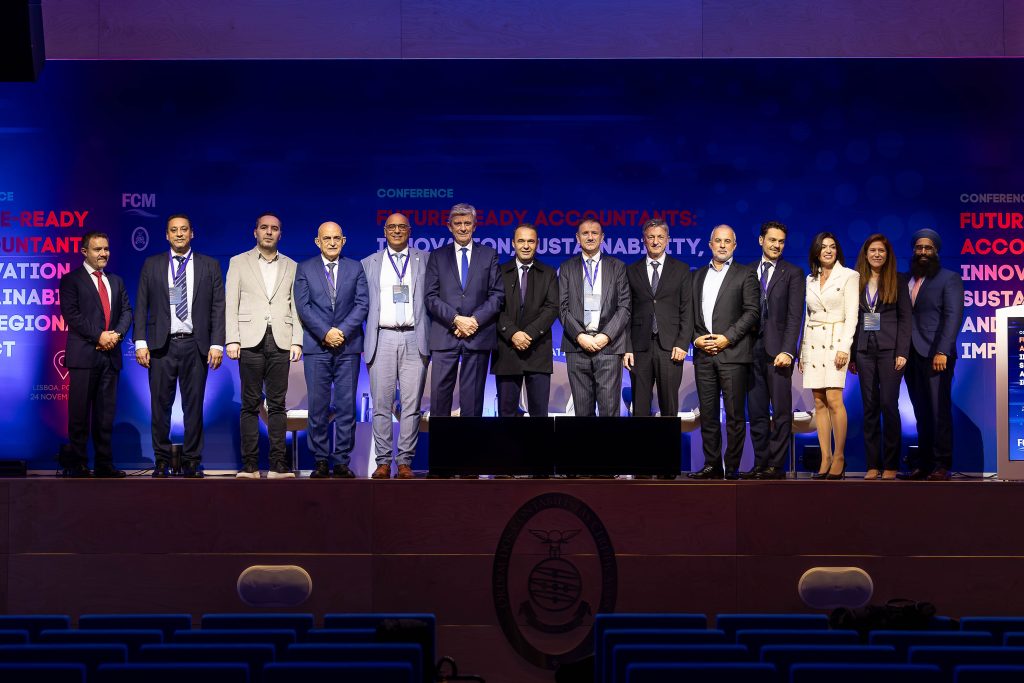
On 24 November, the António Domingues de Azevedo Auditorium, in Lisbon, once again became the stage for an international conference — gathering representatives from diverse jurisdictions across Europe and North Africa, all united by a shared Mediterranean sea.
Titled “Future-Ready Accountants: Innovation, Sustainability and Regional Impact”, the event was timed to coincide with the upcoming Mediterranean Day on 28 November, an occasion celebrating intercultural exchange, cooperation, diversity and the strengthening of bonds among Mediterranean peoples. (Mediterranean Day)
Throughout an afternoon of rich debate, the Ordem dos Contabilistas Certificados (OCC) and FCM joined forces to discuss how the cultural and professional diversity of various countries can help address the multiple challenges of our modern era.
Adaptability and Integrity
At the opening session, after the screening of OCC’s institutional video (English version), the OCC’s President stressed that regarding sustainability reporting “certified accountants and auditors are increasingly integrated,” and that these professionals have the duty to “provide the trust needed by users of non-financial information.”
In his remarks, FCM President Nelson Ferreira underscored the importance of conferences like this one to ensure “that accountants are ready to face the future and a rapidly changing reality.” He noted that, in the context of technological transformation, professionals must embrace specialisation and strengthen their skills.
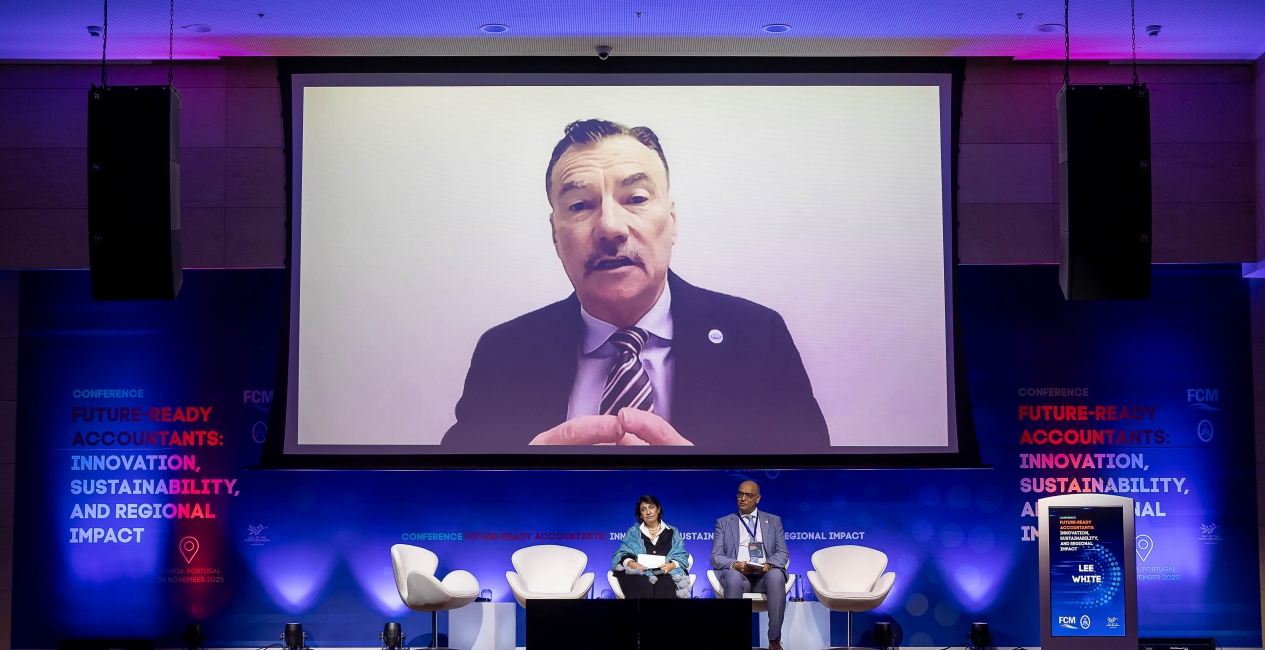
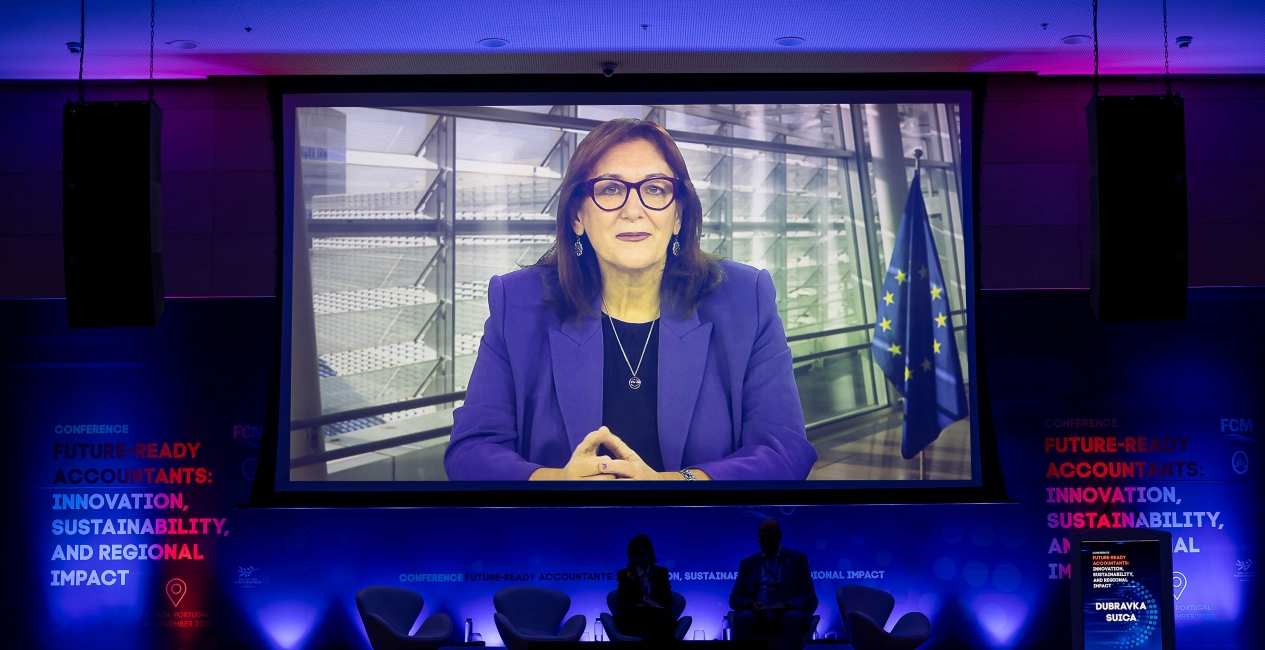
Also contributing via a video message was Lee White, CEO of the International Federation of Accountants (IFAC). He emphasised the vision and leadership shown by the heads of OCC and FCM, particularly the promotion of “spaces of collaboration and reflection that our global profession needs — giving voice to diversity in favour of unity.” He added: “We are stronger when we listen to each other. This is a profession that opens doors anywhere in the world. Adaptability and integrity are what make this profession truly global.”
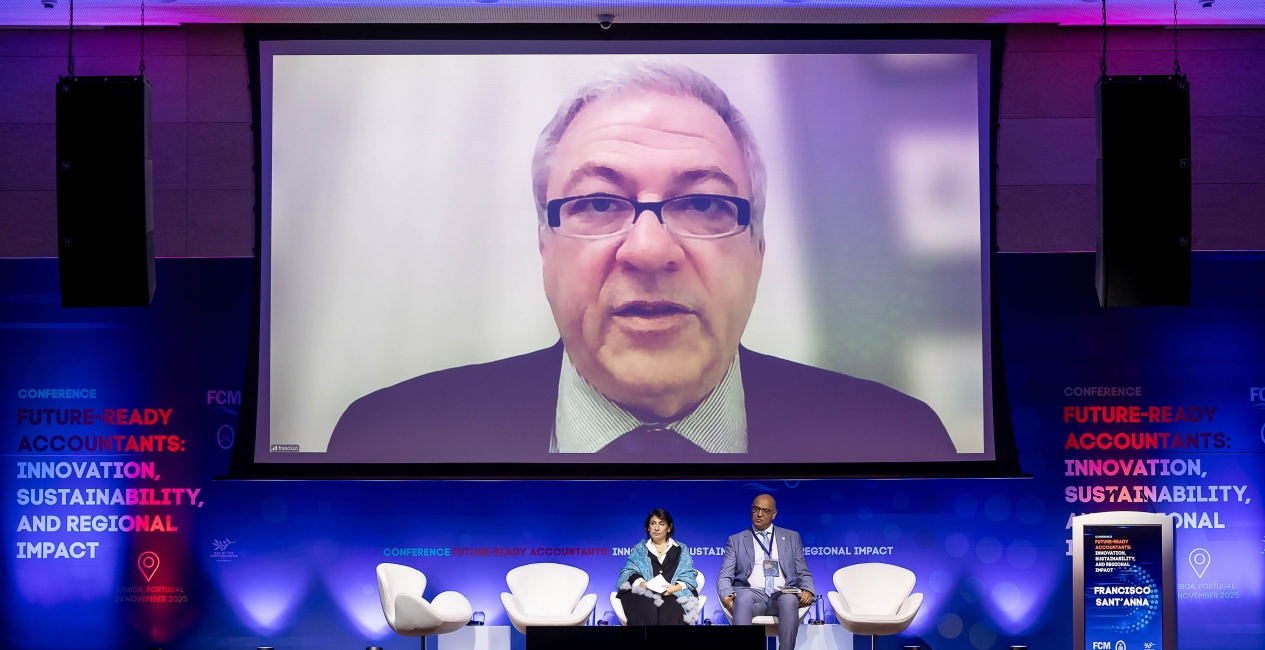
Speaking live from abroad was IFAC Board member Francisco Sant’Anna, who reflected on the demands placed on today’s accounting professionals. The Brazilian accountant asserted that professionals — as “agents of public trust” — should not settle for traditional roles, but strive for greater influence in high-level decision-making due to their unique knowledge. For Sant’Anna, the current global transformations represent an opportunity for the repositioning of the certified accountant in the world.
“Acting now is not optional — it is strategic.”
ESG, Sustainability and Public Value
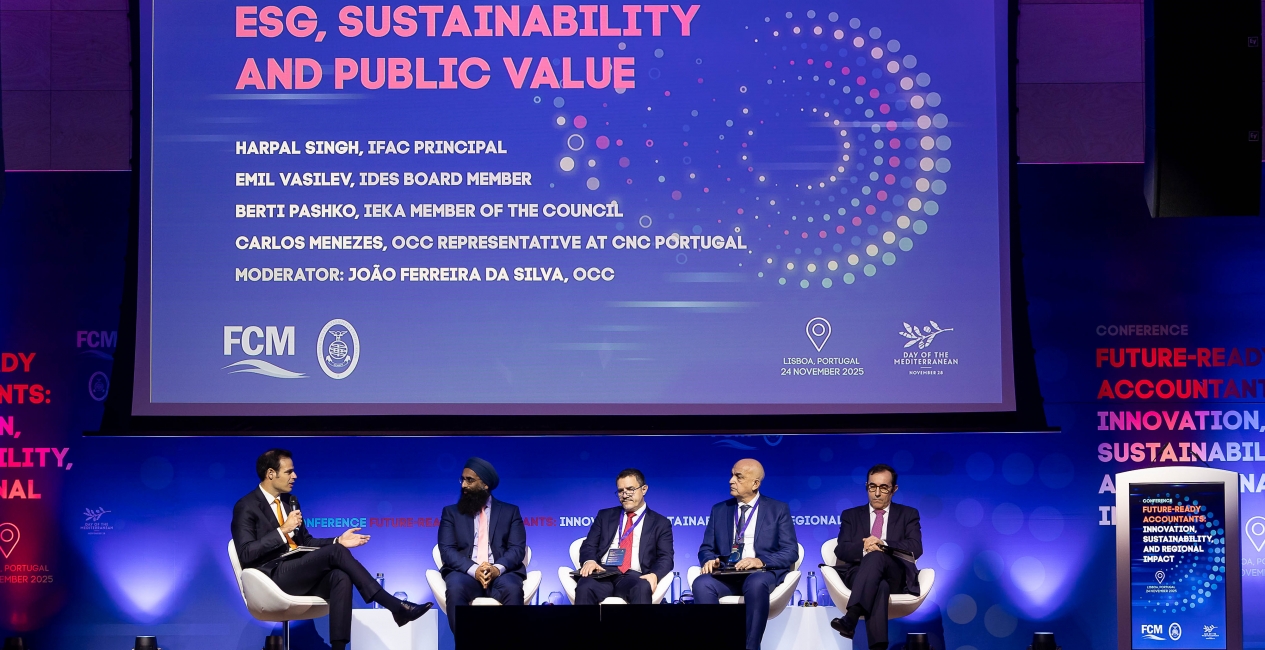
The first panel — titled “ESG, Sustainability and Public Value” — was moderated by João Ferreira da Silva (advisor to the OCC President).
British expert Harpal Singh argued that, for small and medium-sized enterprises, resilience in a changing world must be supported by financial and sustainability literacy. As IFAC’s lead for SMEs and a representative of the Edinburgh Group, he emphasised the fundamental need to ensure “the voices of these companies are heard.”
From Bulgaria, Emil Vasilev (Institute of Certified Public Accountants of Bulgaria – IDES) described how his country is integrating sustainability directives, particularly regarding corporate sustainability reporting, in the context of Europe’s evolving regulatory framework. Vasilev noted that the one-year postponement of the directive offers breathing space — but also brings uncertainty.
From Albania, Berti Pashko (Institute of Certified Public Accountants of Albania – IEKA) presented his institution’s commitment to sustainability. He argued that sustainability will contribute to good governance, integrity and the building of public trust.
Representing OCC on the national accounting standards committee, Carlos Menezes stressed that “acting now is not optional — it is strategic.” He added that the connectivity between financial reporting and sustainability reporting cannot wait: the two must merge into a coherent and unified narrative.
Rethinking Management and Leadership in the Mediterranean
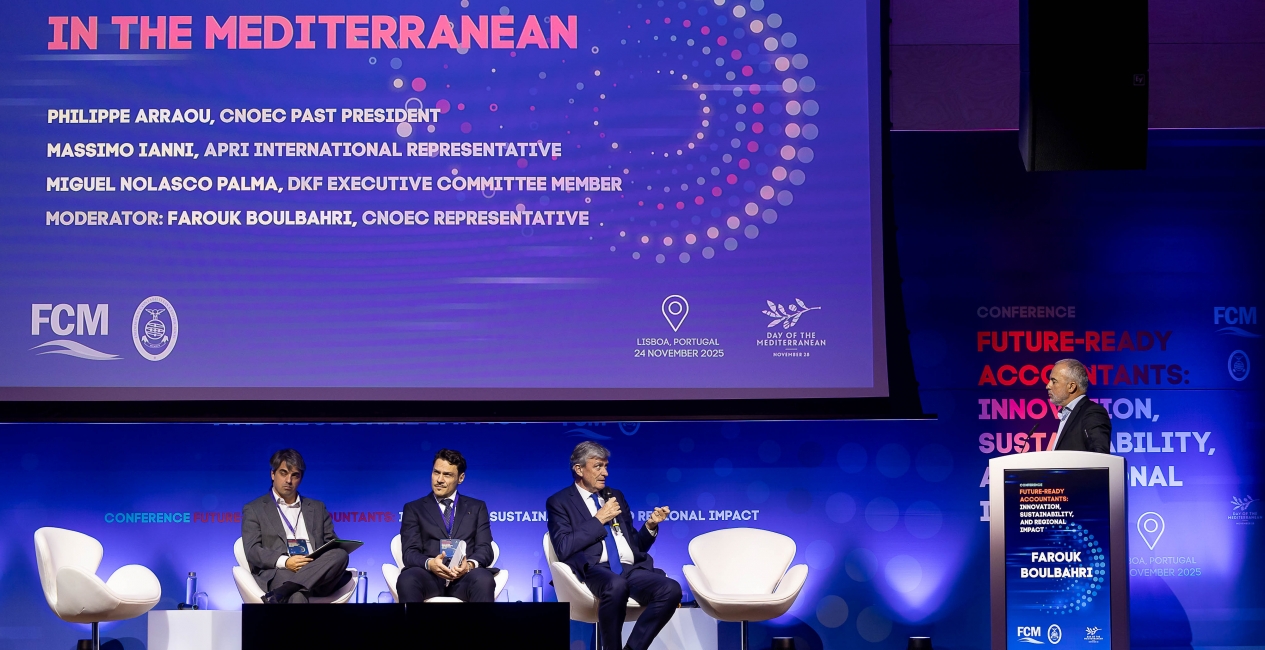
After the coffee break came the panel “Rethinking Management in the Mediterranean”, moderated by a representative of the French Conseil National de l'Ordre des Experts-Comptables (CNOEC), who highlighted the professional culture across Mediterranean organisations.
Veteran figure in international accounting gatherings, Philippe Arraou (ex-President of CNOEC) focused on the human dimension: “We must care deeply for the people we work with and manage human resources as part of the business. The best way to manage people is to set clear goals, delegate responsibility, and integrate them into the enterprise.” He emphasised responsibility and recognition as key pillars for retaining talent.
Italian accountant Massimo Ianni (APRI International), working on policies for internationalisation, argued that rethinking management is not merely a slogan, but a framework encompassing various components — especially leadership renewal.
From the consulting firm DFK, Miguel Nolasco Palma argued that talent retention in SMEs depends on engaging employees — especially younger generations, who value a work-life balance over traditional career progression. As he put it: “The new generations don’t want to be partners in the firm — they want fair remuneration while preserving social and family life.” He posed a critical question facing Mediterranean economies: “Who will lead organisations in the near future?”
Capacity Building and Regional Cooperation
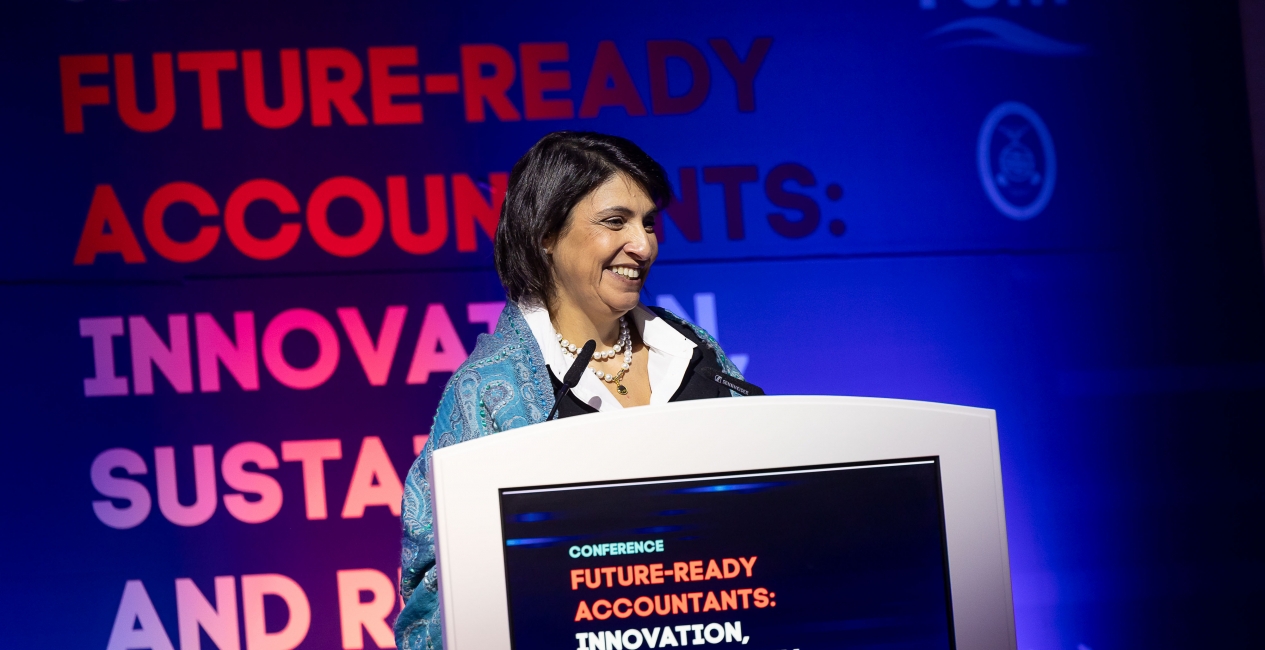
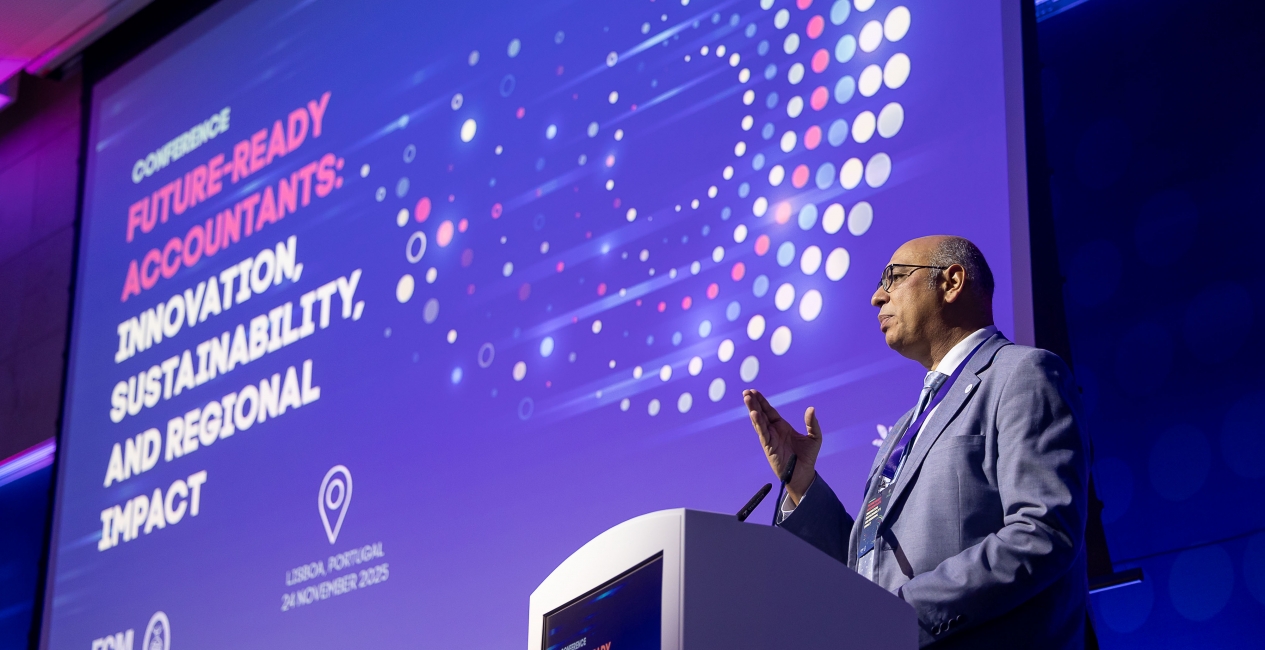
The next session, “Capacity Building and Regional Cooperation”, highlighted how professional accountancy organisations can shape the future of the profession.
From Greece, Panagiotis Alamanos (IFAC) urged national PAOs to adopt resilient strategies focused on their members, capable of shaping the evolution of the accountancy profession in the Mediterranean region.
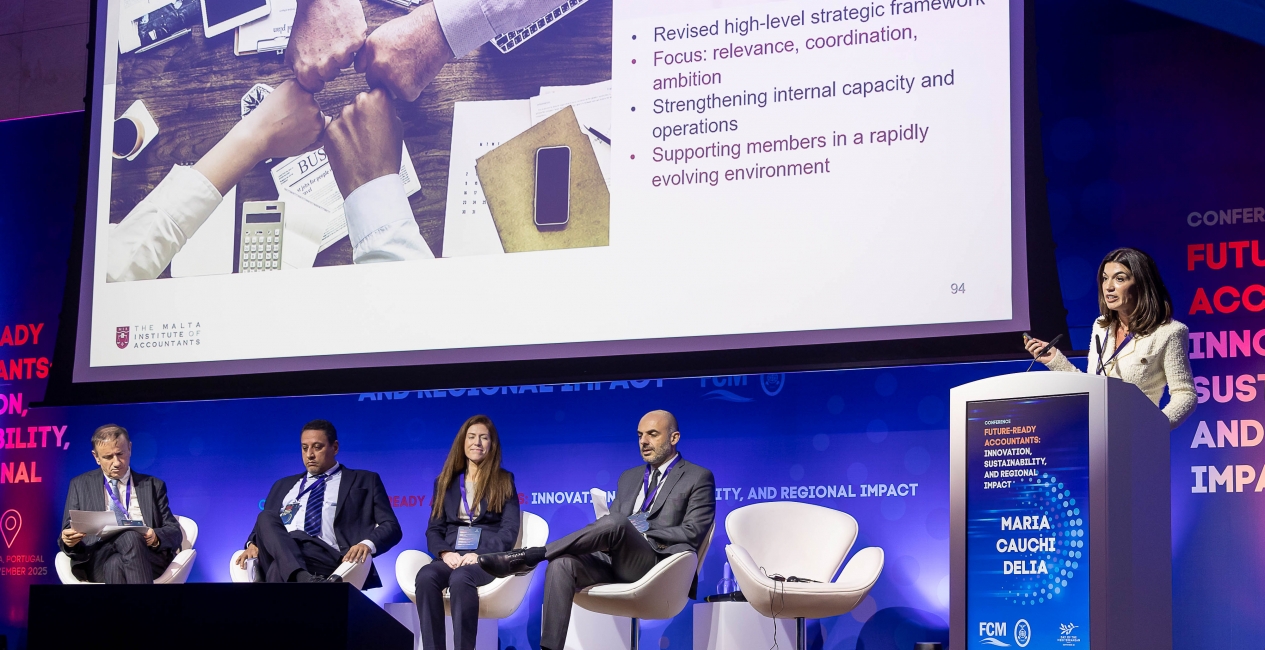
From Malta, Maria Cauchi Delia (CEO of the Institute of Accountants of Malta) presented her organisation (4,500 members) and emphasised “relevance and sustainability” as the foundations of its strategy. She defended that accountants must develop cross-cutting skills, and avoid the narrow stereotype — in particular by raising awareness among schools, universities, regulators and authorities about careers in accountancy.
Representing Tunisia, Sami Soumri (Secretary-General of the Order of Accountants of Tunisia – OCT) discussed professional cooperation and training in his country. Stressing the need for sharing, cooperation and joint effort, he proposed the creation of a Mediterranean Observatory for Accountancy Training. Faced with emerging risks, Soumri identified the certified accountant as “the guarantor of financial information and economic stability in our countries.”
From the global body Association of Chartered Certified Accountants (ACCA), Ms Caitriona Allis (Head of Europe) reiterated the commitment to public interest and outlined key trends: changing standards, competition for talent and digital transformation. The session was moderated by Society of Certified Accountants and Auditors of Kosovo (SCAAK), whose representative underlined regional cooperation as the bedrock of FCM’s dynamic.
A Pact of Hope for the Mediterranean
A central theme of the conference was the newly launched Pact for the Mediterranean by the European Commission on 16 October 2025 — a bold initiative aimed at deepening cooperation and building a “Common Mediterranean Space” rooted in joint ownership, co-creation and responsibility. (European Commission)
During the closing session, FCM President Nelson Ferreira described the Pact as a “signal of hope.” He noted the potential of the planned “Mediterranean University” to provide specialised training for accounting and tax professionals across the region.
In her remarks, business leader Sofia Baião Horta affirmed that the Pact promises shared prosperity — and called for the business community to be deeply engaged in this commitment. As representative of the Confederação Empresarial de Portugal (CIP) for international relations, she argued that the Mediterranean’s voice and dimension must be acknowledged in the broader EU political agenda. She also reminded participants that Portugal will assume the presidency of the MED‑9 group in 2027 — the alliance of nine euro-Mediterranean countries working together on issues like migration, climate and economic stability.
In closing, Nelson Ferreira spoke of “the beginning of a new era,” calling the Pact for the Mediterranean an “impetus for new achievements.” He underlined that, for certified accountants, specialisation in sustainability reporting will be a central step towards adding value to the profession.

This conference reaffirmed that the accounting profession in the Mediterranean is not only prepared to adapt — it is ready to lead, inspire and shape a future of cooperation, sustainability and shared prosperity across the region.

